

The Peli Lens™
Resources for Doctors
There’s a lot of information out there on the Peli Lens™ (we know because we created much of it). To make it easier for doctors to help their patients, we’ve compiled this page of additional resources about the lenses themselves along with instructions on fitting and training patients to use the Peli Lens™.
Don’t want to read it all online? We offer a handy downloadable guide that spells out the steps for training your patient with the Peli Lens.
Fitting Time
How to Fit the Peli Lens™
Do you think your patient would benefit from the Peli Lens™? If so, we recommend the following steps to make the most of it. Once you determine if it’s for sure the right solution for your patient’s vision issues, getting the lenses is straightforward and simple.
Glasses or fitovers (NOT patient’s everyday glasses)
It is very important that the patient look between the prisms to get the benefits of the expanded visual field. Looking directly through the prism will cause double vision. This is undesirable. Supplementing Peli Lens™ peripheral prisms with vision training and therapy sessions has been shown to dramatically improve the patient’s recognition and understanding of the expanded visual field. Your patient should expect to spend 15-20 minutes a day training at home to maximize their results.
The goal of training is to help the patient reliably identify the location of their field expansion.
Training
Recommended Exercises
When first worn, peripheral prisms create a certain level of visual confusion. The patient tries to distinguish what information is in their blind field and what information is in their seeing field. The goal of training is to minimize this confusion. A pilot study done at Schepens Eye Research Institute showed patients to be 95% accurate in distinguishing the confusing images after just six one-hour training sessions in their driving simulator.
It is very important that your patient look between the prisms to get the benefits of the expanded visual field. Looking directly through the prism will cause double vision. This is undesirable.

The included 450 and 527 filters are two of our most popular filters generally associated with enhancing contrast and reducing glare for low vision patients.
They work by boosting the contrast between objects and their background, making details easier to see. These filters also reduce glare from bright lights or reflections, cutting down on discomfort.
You may also add more tints to your kit as you prefer. If you have tints in mind, give us a call to order – or go directly to Chadwick’s Tint Library to see our in-house library.


Demonstrate Field Expansion
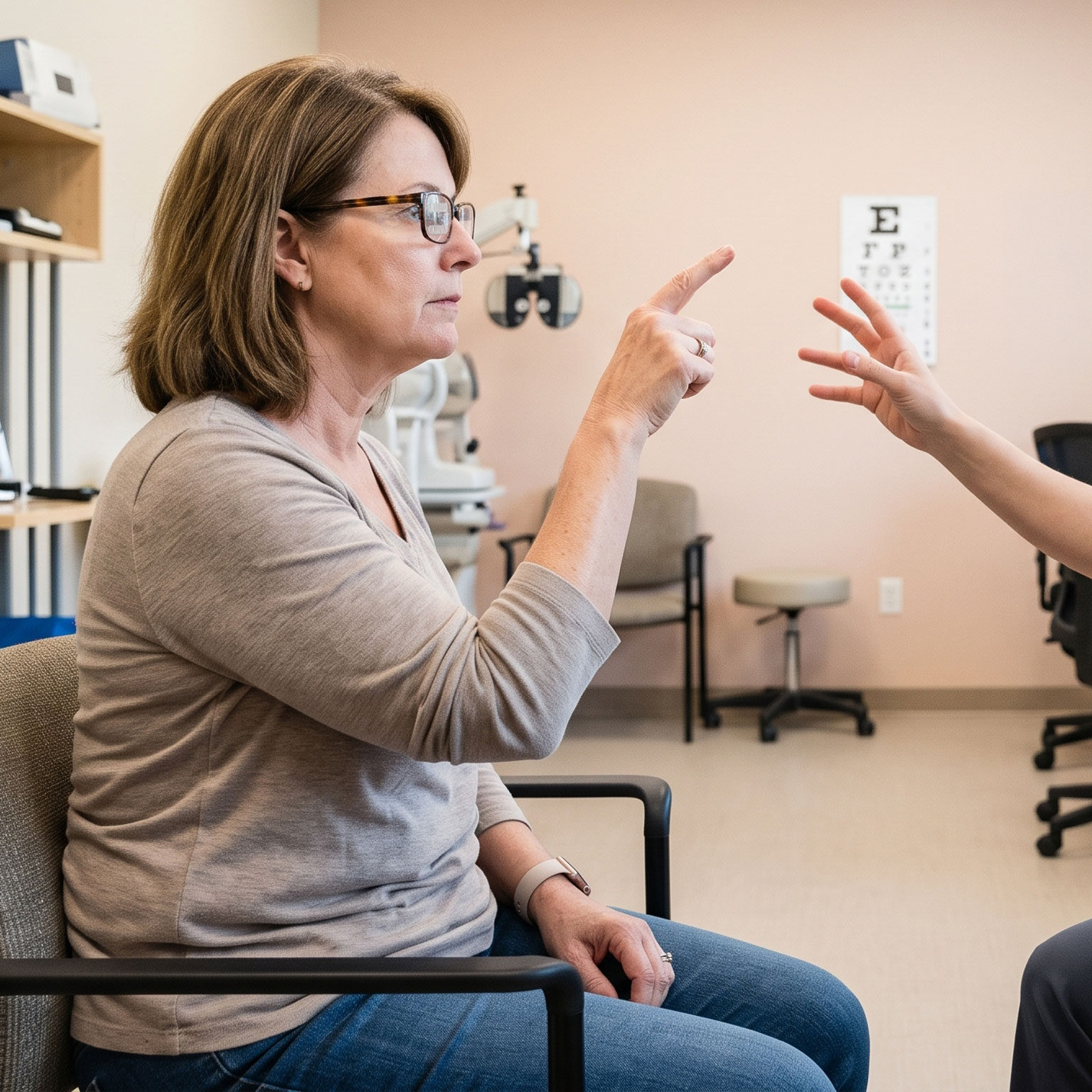
Have the patient fixate on your nose and tell you when your hand comes into view.
Starting beyond the shoulder on their blind side, wiggle your fingers toward their nose. Horizontal prisms expand the field just above or below the midline; oblique prisms, along it.
When they see your hand, have them point to it, then find it in central vision. They'll often point to your face, where they see your hand's image.
Reach and Touch Training

While the patient fixates on your nose, reach your hand into their blind side.
Have them grab it as soon as they detect it through the prism. Patients should also practice this at home with a loved one or on their own.
In vision or occupational therapy settings, many doctors and therapists set up a reach and touch program on a Sanet Vision Integrator or similar device.
Training Walk
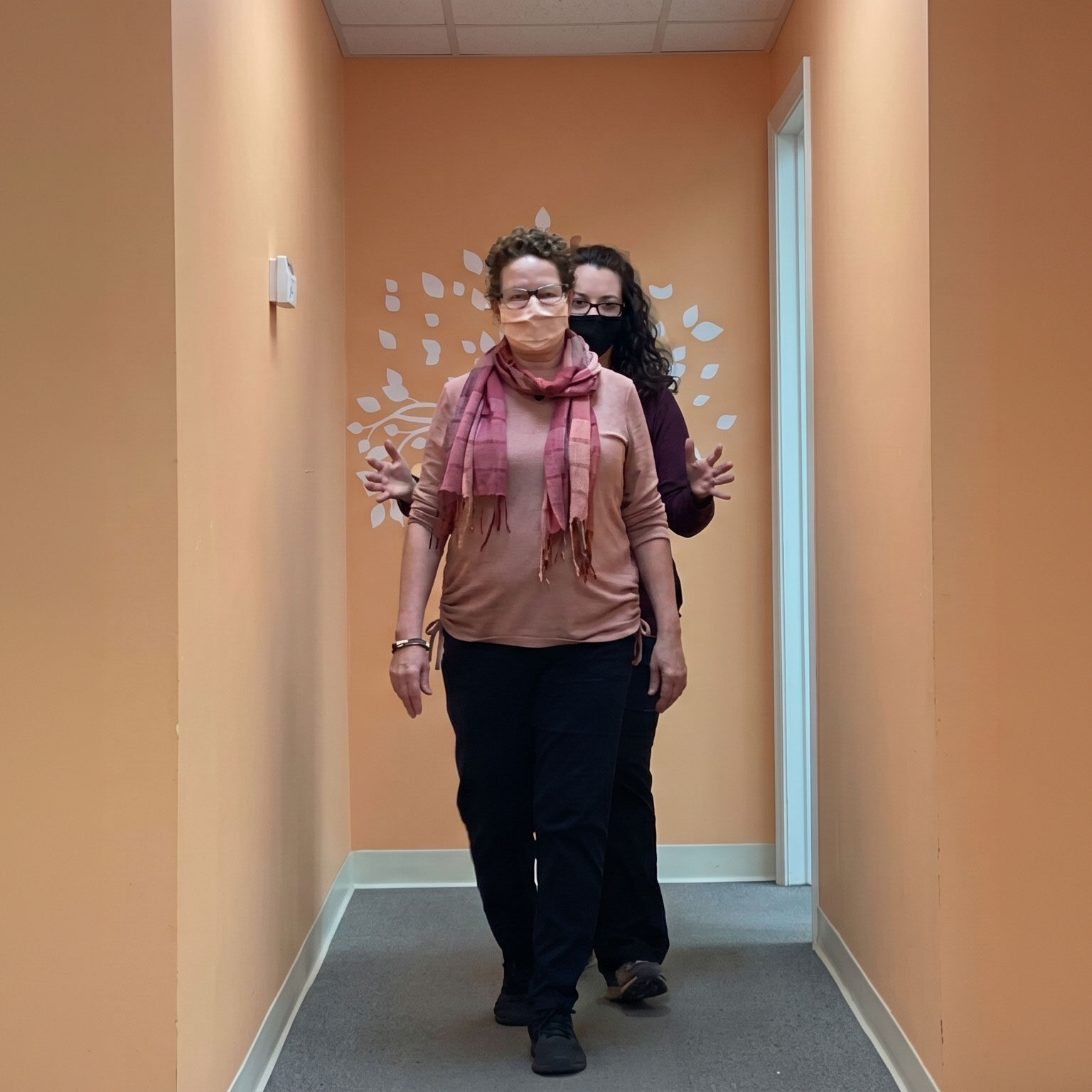
Once the patient can reliably detect movement through the prism, take the training into real spaces.
Lead them from uncluttered areas, such as a hallway, to progressively more cluttered ones, such as a waiting room filled with chairs as potential obstacles.
Throughout the walk, constantly ask your patient to report what they observe. Their answers show you how well they're using the expanded field and where they still need practice.
Putting It Together
The Peli Lens™ for Mobility
Check out this video to learn more about using the Peli Lens™ for mobility so that your patients can better navigate their world.
care
Caring for Your Peli Lens™
Cleaning Instructions
Before the Follow-Up
Coaching Your Patient Through Training
The more effort your patient puts into practicing with their training prisms, the more they'll get out of them. Studies have shown that as little as 20 minutes a day of exercises dramatically increases their ability to detect information on their blind side.
At that pace, your patient can complete about 6 hours of training before their follow-up appointment, which is ample time to get them accustomed to and comfortable with the prisms.
Encourage them to practice in situations where they'll wear the prisms often:
Grocery Shopping
Walking the Dog
Going to the mall
Golfing
Questions
Peli Lens™ FAQs
Quick answers to the questions we hear most from practitioners fitting and training patients with the Peli Lens™.
How much should my patient practice each day?
Your patient should expect to spend 15-20 minutes a day training at home to maximize their results. Studies have shown that spending as little as 20 minutes a day performing the exercises dramatically increases their ability to detect information on their blind side.
How much training will they get before the follow-up visit?
At 20 minutes a day, your patient should be able to complete about 6 hours of training before the follow-up appointment, which is ample time to get them accustomed to and comfortable with the prisms.
Where should my patient practice?
We recommend practicing with the prisms in situations where your patient will wear them frequently, such as grocery shopping, walking the dog, golfing, or going to the mall.
Where should my patient look when wearing the prisms?
It is very important that the patient look between the prisms to get the benefits of the expanded visual field. Looking directly through the prism will cause double vision.
How long should my patient wear training prisms before moving to full-power prisms?
We recommend that a patient wear training prisms for 4-to-6 weeks and spend about 20 minutes a day performing self-training exercises to help with adaptation. After a successful trial, we recommend moving to full-power prisms, the best option for long-term use.
Should my patient wear the Peli Lens™ all the time?
No. The Peli Lens™ is designed to be worn as a mobility device. Because the peripheral prisms can hinder patients during certain activities such as reading, computer use, and watching TV, fitting them on a pair of glasses the patient wears all the time is not advised. It is important that the patient be able to choose when to wear the lens.
Which prisms should I use: horizontal or oblique?
We offer horizontal prisms for mobility and oblique prisms for driving. The PEK includes one Oblique Training Prism Kit and one Horizontal Training Prism Kit, so you can try either.
How do I show a patient their field expansion?
Have the patient focus on your nose while you move your fingers in from their blind side, and ask them to tell you when your hand comes into view.
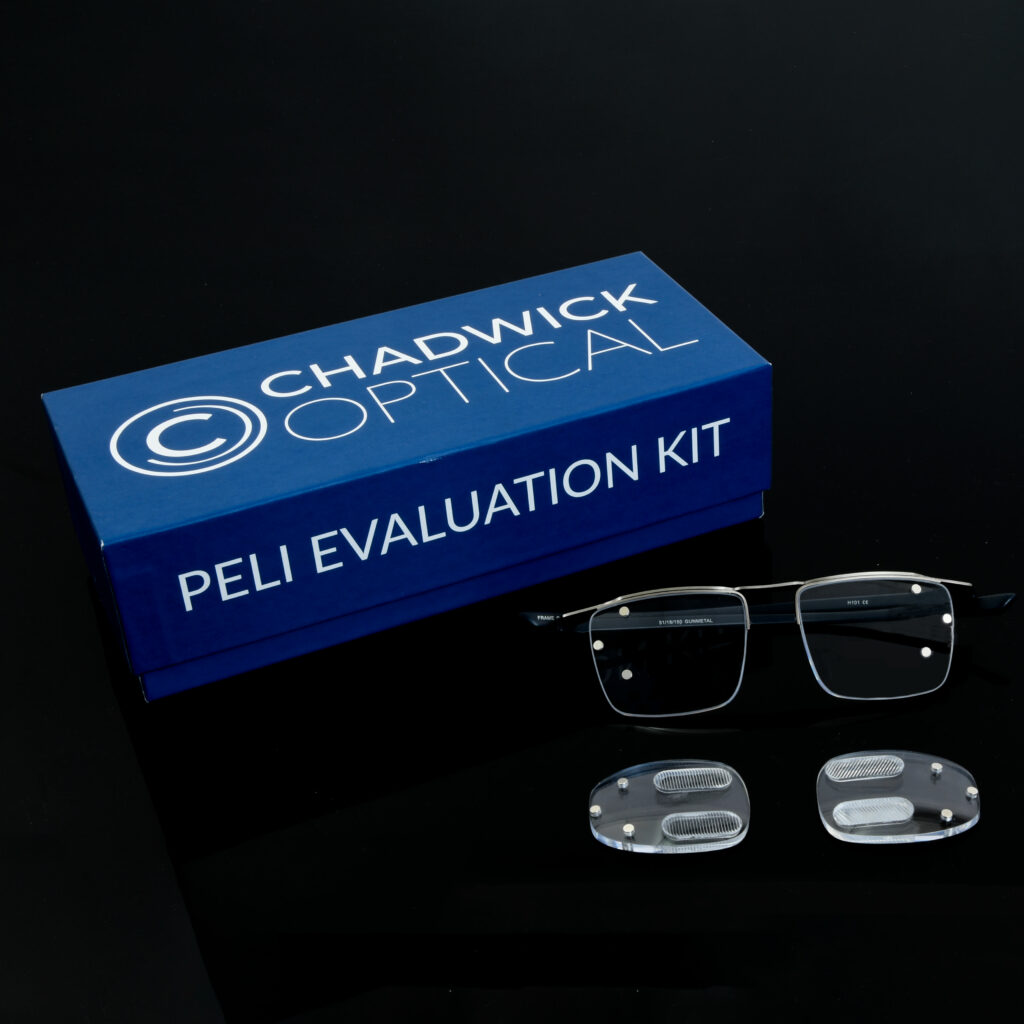
PEK
The PEK includes one Oblique Training Prism Kit and one Horizontal Training Prism Kit.
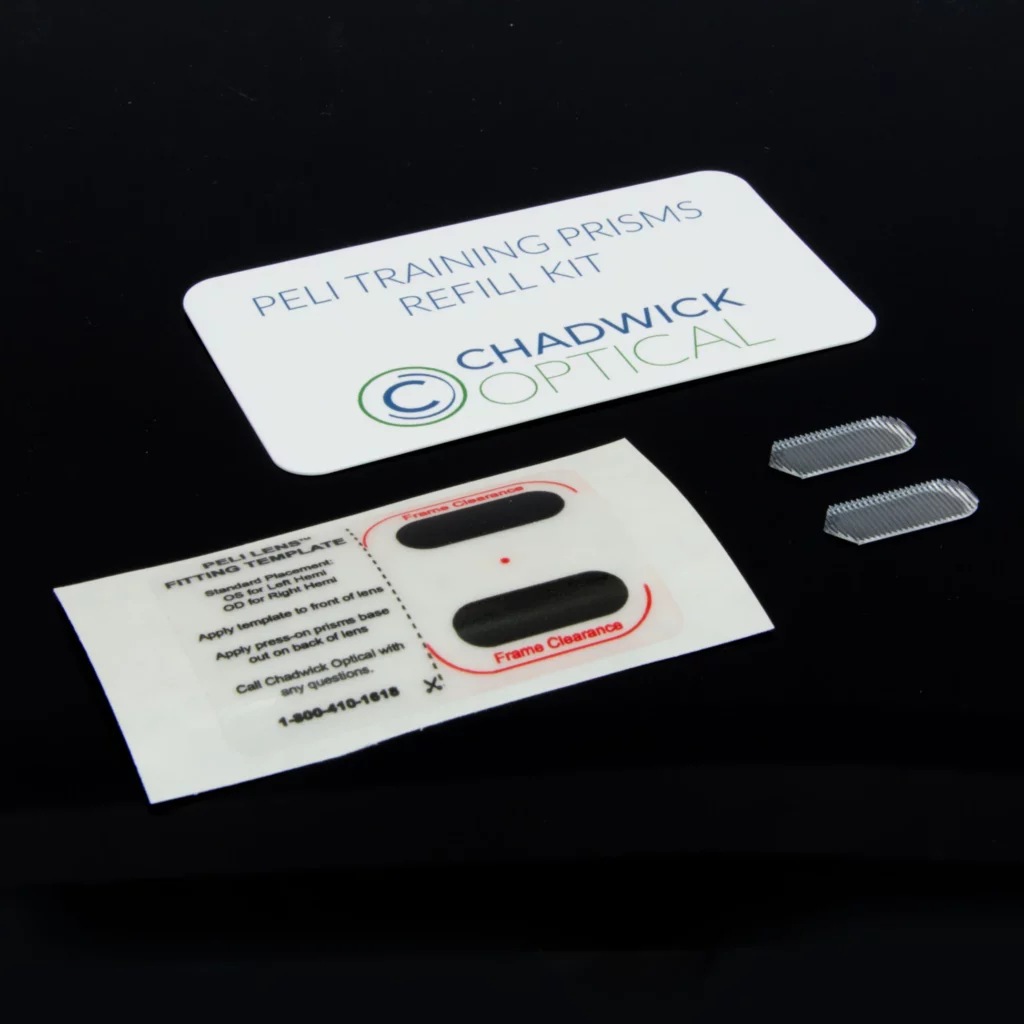
PEK Refills
When you’re ready to order refills, just click the link below.
Go Deeper
Peli Lens™ Resources
In case you still need more information about the Peli Lens and how it benefits your patients, we’re created a few extra resource pages for you.