

Principles of Vision
What is Low Vision Like?
Most likely, every depiction you’ve seen of what it’s like to have low vision…is misleading.
Whether it's a blurry filter, darkened edges or black blotches over a crystal-clear image, these depictions set the wrong expectations - and they can distort how you relate to someone with a visual impairment.
The basics
What is low vision, really?
“Low vision” is a term that often gets tossed around - and it can mean different things depending on who you ask. Officially, it refers to someone whose best-corrected visual acuity is 20/70 or worse, or whose visual field is significantly restricted. But in practice, anyone with vision that’s “a little off” may get lumped into this category.
IMPORTANT TO REMEMBER:
Just because someone doesn’t meet the legal definition of low vision doesn’t mean their visual experience isn’t dramatically affected.
The PRoblem
Low Vision Simulations are Misleading
Let’s talk about those visual simulations of conditions like macular degeneration, diabetic retinopathy or hemianopia. They’re often inaccurate. Here’s why:
They Use Crystal-Clear Photographs
Let’s talk about those visual simulations of conditions like macular degeneration, diabetic retinopathy or hemianopia. They’re often inaccurate. Here’s why:
The blind spot moves with the eyes
In real vision loss, the missing or blurry part stays fixed relative to your gaze. If you move your eyes, the blind spot moves with you. You can’t “look past” it.
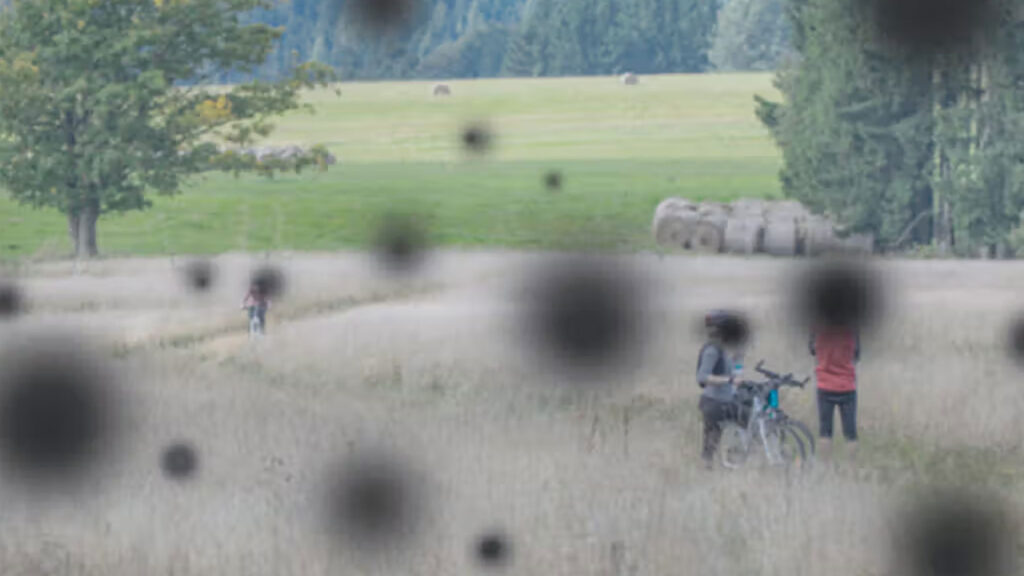
Diabetic Retinopathy

Macular Degeneration

Hemianopia
The Challenge With Filters
Balancing two critical needs
When evaluating filters for low vision patients, we balance two critical needs:
- Light Sensitivity (Pain Relief)
- Contrast Sensitivity (Safety)
Patients naturally prioritize pain avoidance during subjective filter assessment, managing light sensitivity rather than contrast. But that assessment can decrease contrast even further in many cases, leaving patients more vulnerable to hazards like curbs, steps, and low-light obstacles.
That trade-off is costly.
The Reality
What Do They Really See?
Surprisingly, they often don’t see anything missing at all. They don’t see black spots. They don’t see blur. They just don’t see.
Why? Because the brain fills in the blanks.
Visual information is processed in the back of the eye (the retina) and sent down the optic nerve to the brain. If part of that information is missing, your brain:
- Doesn’t alert you
- Doesn’t create a black hole
- Just fills in with what it thinks should be there
EXAMPLE: YOUR NATURAL BLIND SPOT
Every eye has one spot where the optic nerve exits the retina, no photoreceptors there, no sight. But you don't notice it. Your brain just fills it in.
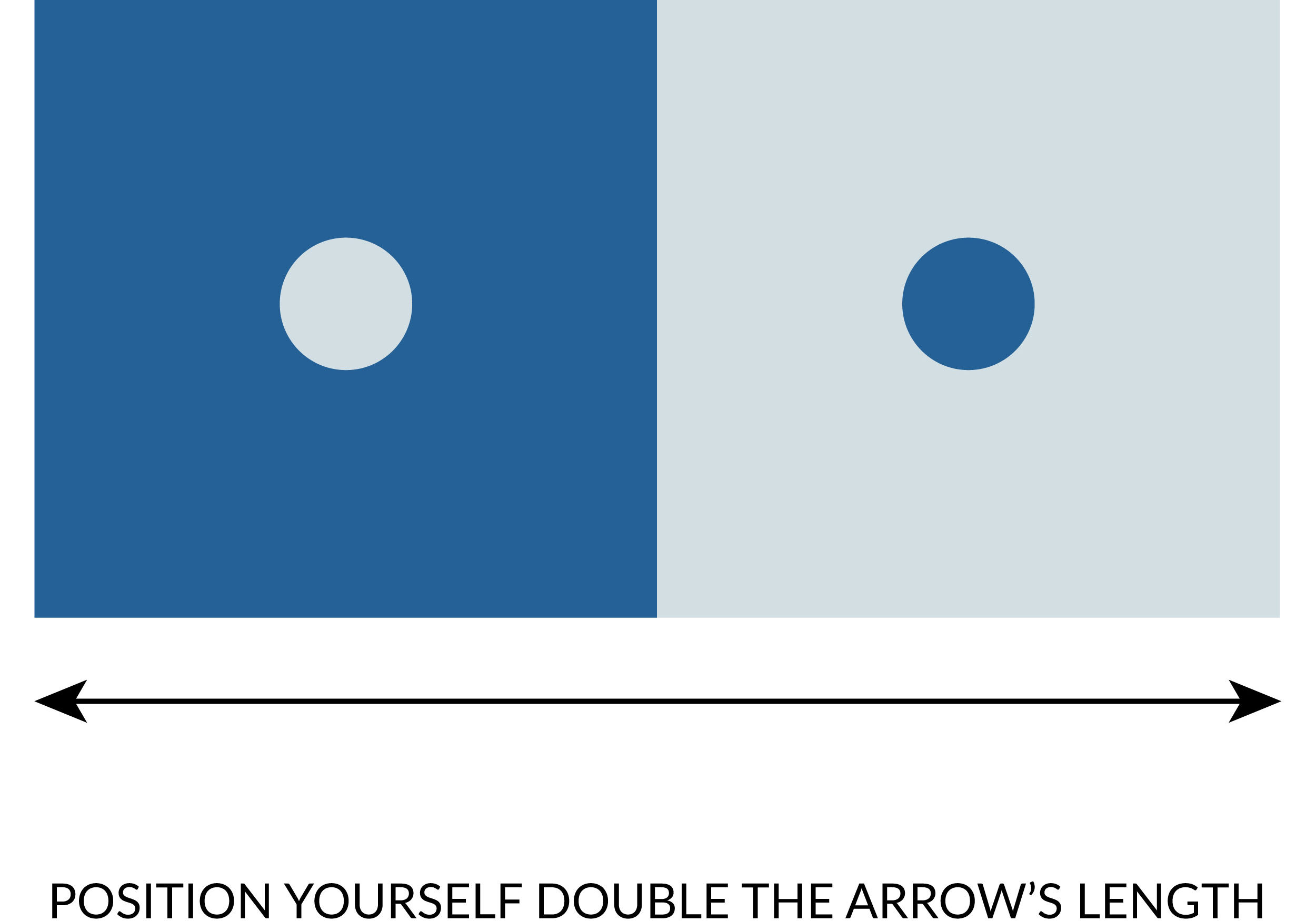
Test your blind spot
Try this:
- Position yourself double the arrow's length from the screen
- Close your left eye
- Look at the left dot on the image with your right eye
- Move closer or farther until the right dot vanishes
That's your physiological blind spot, the spot where your optic nerve enters the retina. You don't see it in daily life, because your brain fills it in.
GOING UNNOTICED
WHY many PEOPLE DON'T KNOW THEY've LOST VISION
Because the brain is so good at covering for the eye, someone could lose:
- Half their vision
- Almost all of their peripheral vision
- Major parts of their central vision
…and not even notice.
That’s why many vision impairments go undiagnosed for too long.
Seeing What Isn't There
Charles Bonnet SYndromE
If someone has significant vision loss, they may begin to see things that don’t exist. This is called Charles Bonnet Syndrome. It’s like phantom limb syndrome for the eyes.
When the brain isn’t getting normal visual input, it may invent images - faces, shapes, figures, even entire scenes - to fill in the silence.
These hallucinations:
- Are not a sign of mental illness
- Are more common than most realize
- Can be scary or confusing for those who don’t know what’s happening
If a patient describes “seeing things,” don’t dismiss it. They may be experiencing a real, known neurological response to vision loss.
The Bottom Line
What To Remember
Vision loss isn't just "blur" or "darkness" or "black spots." It's subtle. It's sneaky. And it's different for every individual. So next time you see an overly dramatized simulation of low vision, remember:
- Real vision is not like a photograph
- Missing vision doesn't always feel "missing"
- People with vision loss often need understanding more than assumptions