

Complicated RX
High Add
Some patients need more than a great prescription, they need a lens engineered for a specific problem. Migraines. Color vision deficiency. Eyes that won't quite work as a team.
We have specialty lens lines built for exactly these situations.
High Adds
A DIFFERENT APPROACH
Every bifocal or trifocal segment has an optical center, the one point where the reading power sits exactly where the eye expects it. Move away from that point, and the lens introduces unwanted prism, an effect known as image jump.
The higher the add power, the more prism gets introduced by the same small shift, which is why a +1.00 add barely notices a seg line and a +3.50 add can make one feel like a step off a curb.
Standard segment shapes are built around this trade-off already priced in. Once an add climbs into high-power territory, that trade-off stops being subtle, and the shape of the segment, where its optical center sits, and how it's positioned on the lens, starts to matter as much as the power itself.
That's what the designs below are built to manage.
Prismatic effect increases with both decentration and power, the farther a lens departs from its optical center, the more prism it introduces.
This relationship, Prentice's Rule, is why high-add segments are engineered around where their optical center falls, not just how much power they carry. A flat-top seg keeps that center low and out of the way; a round seg keeps it centered but needs a bigger jump to get there. Every design on this page is a different answer to that same trade-off.
The Designs
Occupational
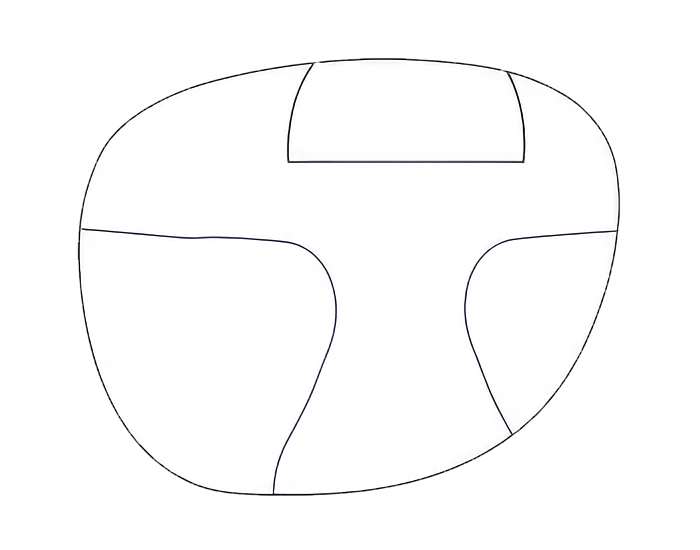
Chadwick's Freeform progressive with standard flat-top bifocal
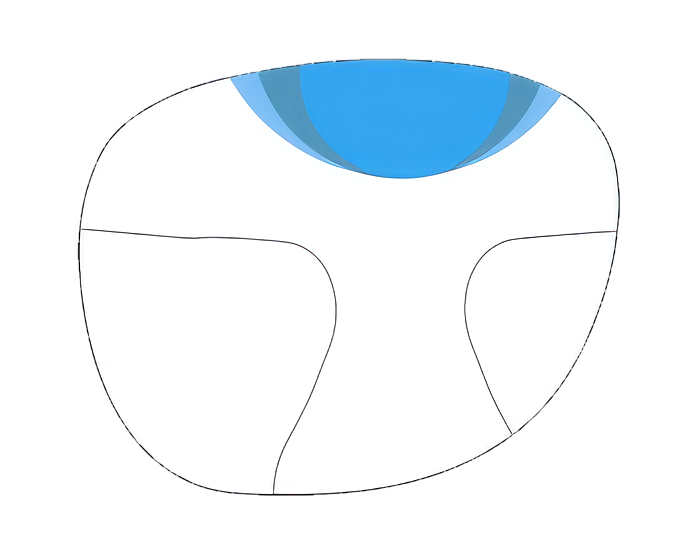
Chadwick's Standard Progressive with free-form round add (any size)
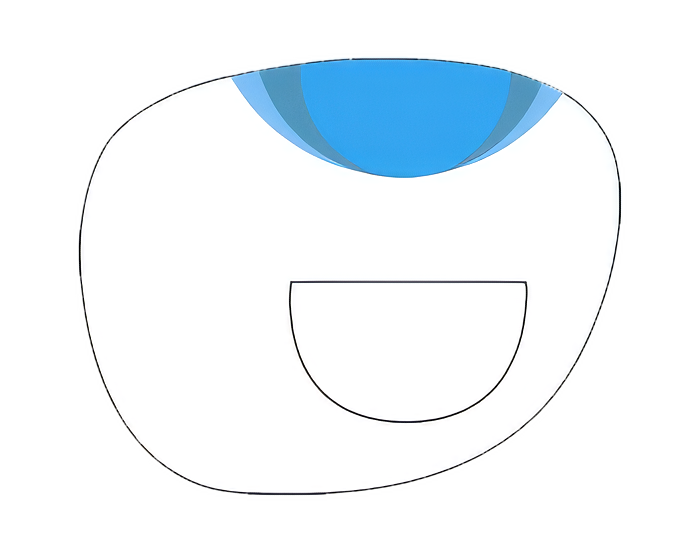
Chadwick's Standard Flat-top with free-form round add (any size)
The Designs
High Add
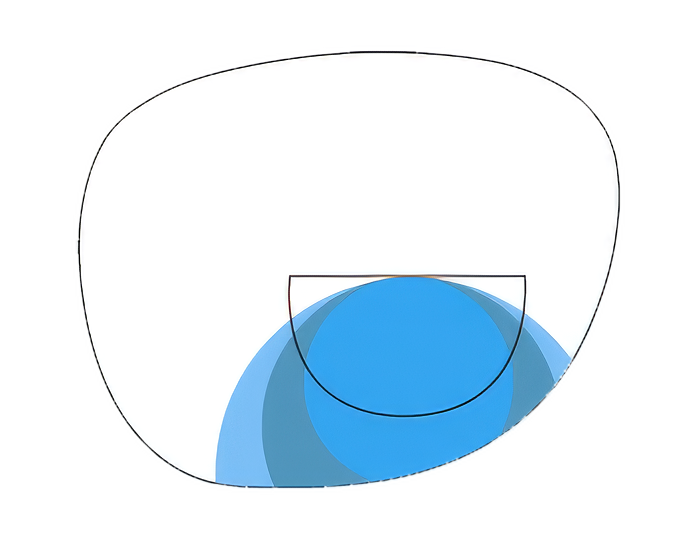
Flat Top with Round on the Back. This design minimizes image jump compared to the full round.
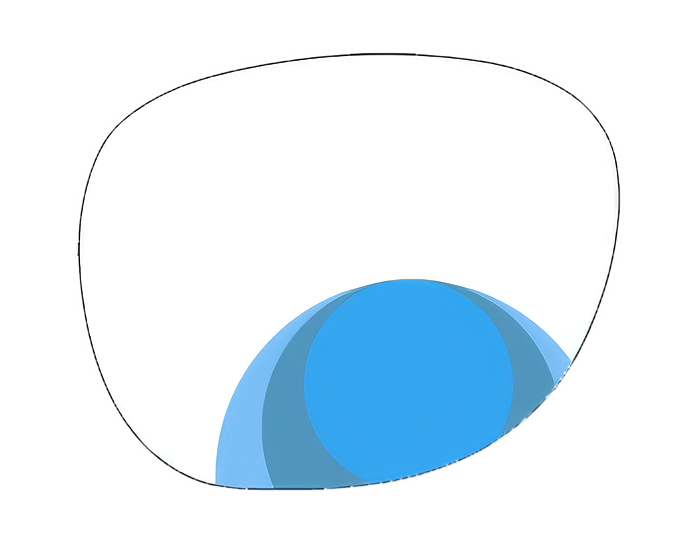
Free-form round. Used for special lens designs that would otherwise be unavailable. Can be placed anywhere on the lens to make golfer segs.
The Designs
Custom Trifocal
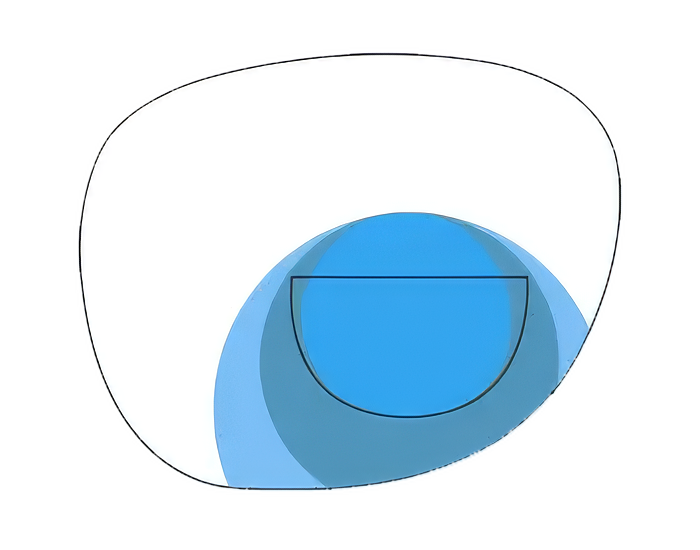
Used when the RX exceeds machine limitations on Shape 4. A concave curve is cut into the front of the lens to make a lens with more power.
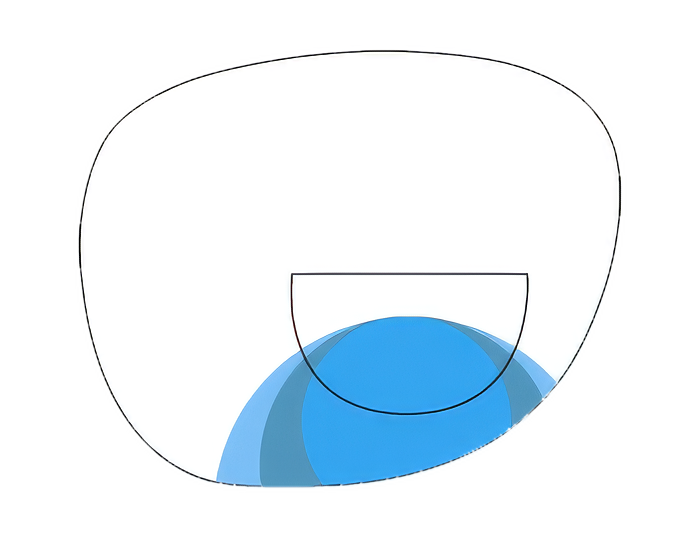
Used to further thin a Shape 5 lens. The lens is run through the blending process on both the front and the back of the lens.