

Will These Glasses Fit My Face? Here's How to Actually Tell
Shopping for glasses frames is frustrating in a very specific way. You find a pair you like, you check the size, you see a string of numbers printed on the inside of the arm -- and you have absolutely no idea what they mean or whether the frame is going to fit your face.
Here's the thing: even if you did know what those numbers meant, they still wouldn't tell you what you actually need to know.
What Those Numbers on the Frame Actually Mean
Most frames have three numbers printed on the inside of one temple arm, something like 52-18-140. The first number is the lens width (called the A measurement), the second is the bridge width -- the gap between the lenses where the frame sits on your nose -- and the third is the temple length, which is the arm.
These numbers describe parts of the frame. What they don't tell you is the one measurement that determines whether the frame is going to fit your face or not.
The Number That Actually Matters
The measurement you really want is the total inside width of the frame: the distance from the inside of one temple to the inside of the other, measured in a straight line when the frame is open.
That number needs to match the width of your face at your temples. If it's too narrow, the frame will press into the sides of your head. If it's too wide, it'll splay out and sit away from your face instead of resting naturally on it.
To measure your face, stand in front of a mirror with a ruler and measure straight across your face from one temple to the other, just above your eyebrows. That's the number you're looking for in a frame. Most adult frames fall somewhere in the 125-135mm range for inside width, but the right number is whatever matches your face -- not a general average.
The Other Thing People Miss: Temple Length
You've probably seen glasses that don't look quite right on someone's face, where the arms stick out instead of wrapping around the ear properly. That's almost always a temple length problem.
The temple is the arm of the frame, and its length is measured from the hinge all the way to the tip. For the frame to fit correctly, the temple needs to be long enough to clear your ear and hook around it comfortably. Common temple lengths are 135mm, 140mm, 145mm, and 150mm. If the temple is too short, the glasses won't stay put and will likely sit at an angle on your face.
To figure out the right temple length for you, measure from the front of your nose along the side of your head, past your ear, to where you want the tip of the arm to end. You want it to go past the ear, not stop at it.
How to Measure at Home
You don't need anything fancy. A millimeter ruler and a mirror will do it.
For face width, hold the ruler horizontally across your forehead just above your brows and measure from temple to temple. That's your target frame width.
For temple length, measure from the bridge of your nose along the side of your head and around your ear to where the arm should end. Err on the side of a little longer rather than a little shorter.
If you already have a pair of glasses that fits well and feels comfortable, the easiest thing you can do is flip them over and read the numbers off the inside of the arm. Use those as your baseline for anything new.
When In Doubt, Ask
These measurements get you a long way on your own, but fit isn't just about numbers. The shape of your nose, the position of your ears, and the specific frame style all play a role. If you've had trouble finding frames that fit in the past, or if you're dealing with a complicated prescription that makes fit even more important, it's worth talking to someone who can actually look at your face and your needs together.
That's what we do. Give us a call or reach out anytime.
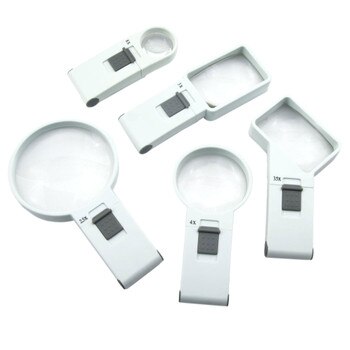
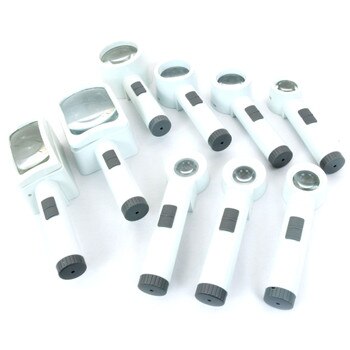
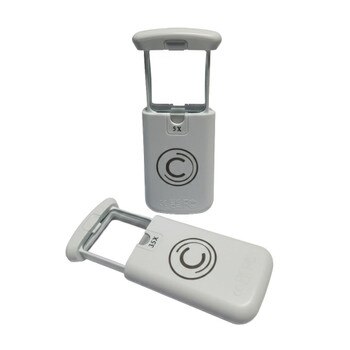
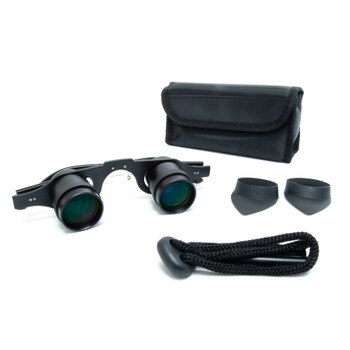
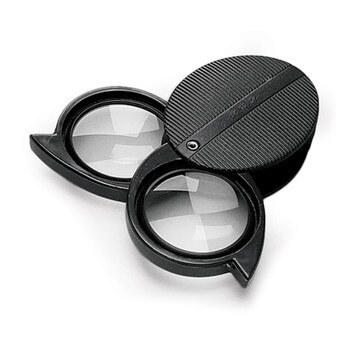
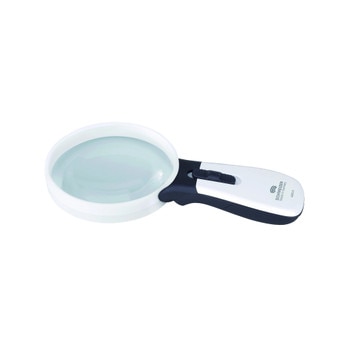
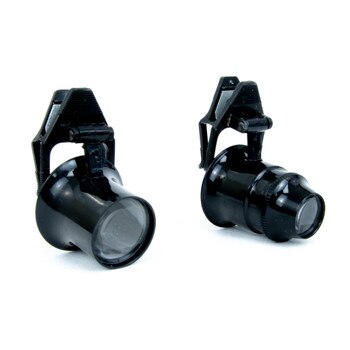
Questions about magnification? Send them to our "Ask Chadwick" video series here.

LOW VISION PRACTITIONERS
HELP LOW VISION PATIENTS LOOK CLOSELY
Stop guessing and start testing with this dedicated in-office diagnostic tool, allowing doctors and technicians to work directly with patients to identify the precise magnification power and form factor required for their daily needs.