

If you've ever grabbed a pair of reading glasses off a rack at the pharmacy and thought "good enough," you're not alone. For a lot of people, they work fine. But if you've been dealing with headaches, eye strain, or that uncomfortable feeling that your eyes are working harder than they should, your drugstore readers might be part of the problem.
Here's what's actually going on.
Who Drugstore Readers Are Made For
Drugstore readers are mass-produced for a hypothetical average person. Take all the humans, blend them together into one generic human, and that's who those glasses are designed for. If you happen to be close to that average, they'll probably work reasonably well. If you're not -- and most people aren't -- you're getting a compromise.
The biggest issue isn't the lens power. It's something called PD, or pupillary distance.
What Is PD and Why Does It Matter?
Your PD is the distance between the centers of your pupils. When a pair of glasses is made for you specifically, the optical center of each lens is lined up directly over each of your eyes. That alignment is what allows your two eyes to work together comfortably and see one clear image.
Drugstore readers are made to a standard PD. Not your PD. If your PD is different from that standard, and there's a good chance it is, the optical centers of the lenses aren't sitting where they should be relative to your eyes.
What Happens When the Centers Are Off
When lenses aren't centered correctly over your eyes, you experience something called prismatic effect. Essentially, the images coming into each eye get shifted slightly. Your eyes are still receiving two separate images, and your brain has to work to stitch them together into one. For some people, that extra work shows up as headaches, double vision, or general eye fatigue, especially after extended reading sessions.
Here's the tricky part: you might be perfectly fine without glasses, but put on a pair of misaligned readers and suddenly your eyes are struggling. The glasses aren't helping, they're creating a new problem on top of the original one.
A Note About Doctor's Office Readers
This is worth knowing: a lot of eye doctors sell reading glasses in their offices. That sounds reassuring, but if those are over-the-counter readers, even nice-looking ones with features like aspheric lenses or thinner profiles, they're still generic. They're still made to a standard PD, not yours. Buying a generic reader at your eye doctor's office isn't really different from buying one at the pharmacy. The packaging might be fancier, but the fundamental limitation is the same.
The features and benefits that get marketed on readers, "aspheric," "thinner," "flatter," aren't bad things, but they're secondary. The thing that actually optimizes your vision is having the lenses centered over your eyes.
So When Should You Get a Custom Pair?
If drugstore readers are working fine for you, there's nothing wrong with using them. But if you're dealing with headaches, double vision, or eye strain that seems related to your readers, it's worth getting a custom pair made with your actual measurements. The difference isn't a minor upgrade, it's glasses that are built for your eyes instead of someone else's.
A proper prescription with your PD taken into account gives your eyes what they need to work together without extra effort. That's the whole point.
If you're not sure where to start, talk to your eye doctor, or give us a call. We're happy to help figure out what's going on.
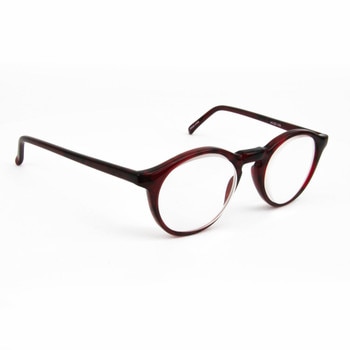
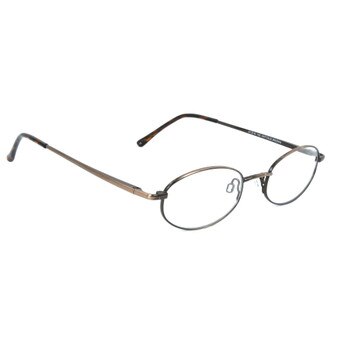
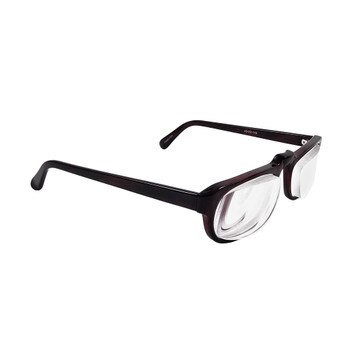
Questions about high-powered glasses? Send them to our "Ask Chadwick" video series here.
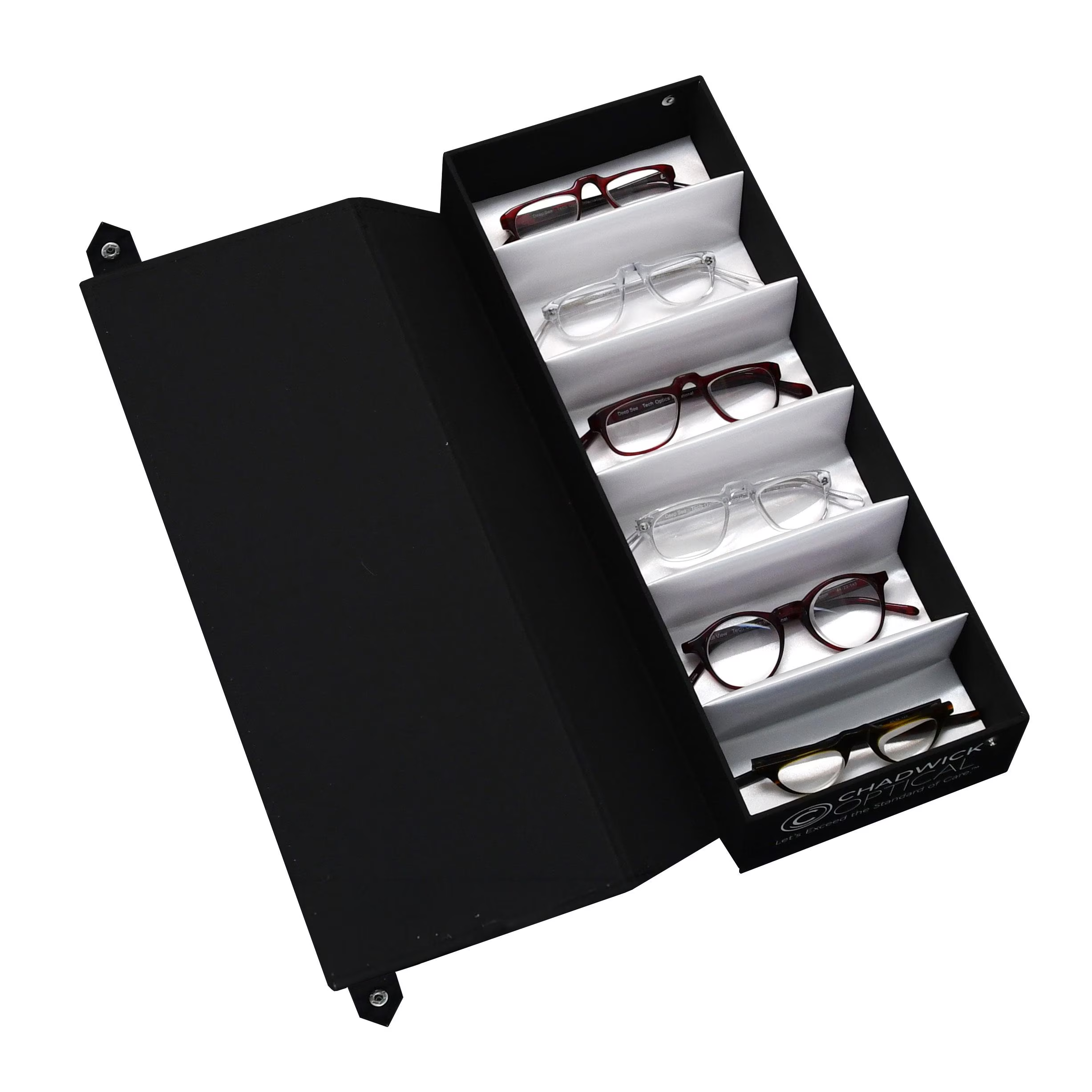
LOW VISION PRACTITIONERS
HELP FIND THE RIGHT PAIR OF READERS
Confidently prescribe hands-free solutions with our kits designed for effective in-office test-driving, allowing clinicians to accurately evaluate high-powered glasses before finalizing strong prescriptions.